
CES noted a crack in the corner of the foundation which is a standard phenomenon called “Shear Corner Cracks”. Cracks can often occur at the corners of foundations that typically spall at a 45-degree angle. This type of crack is a common characteristic of concrete and is caused by thermal differentials between the concrete, brick, and brick mortar and is not a structural concern. If a plastic membrane does not reside under the brick (as required), the mortar will stick to the slab (at the corner) and under thermal load, will create the type of crack as found. The cracks always occur where the plastic stops (is supposed to run to the end of the foundation but is often missed in the field).
Brick Industry Association Technical Note 18: Foundations. Cracking of concrete foundations, as shown in Photo 7, or movement of above grade brickwork away from the foundation corner is often the result of shear stress at the interface between the brick and concrete. Because brick walls expand and concrete foundations shrink, differential movement will cause shearing stresses to develop when these materials are bonded together. A bond break or flashing placed between the concrete and brickwork will permit movement to occur.
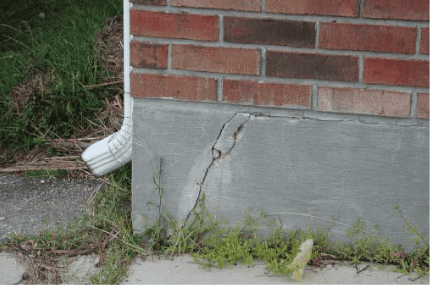
Photo 7-Crack at Foundation Due to Lack of Bond Break between Brickwork and Concrete
Brick Industry Association Technical Note 28 Bond Breaks: Because brickwork expands and concrete foundations shrink, differential movement will cause shearing stresses to develop when these materials are bonded together. Bond breaks help to relieve the stresses caused by these movements between the brick veneer and the supporting foundation. Flashing at the base of the wall between the veneer and the foundation provides a sufficient break in the bond.
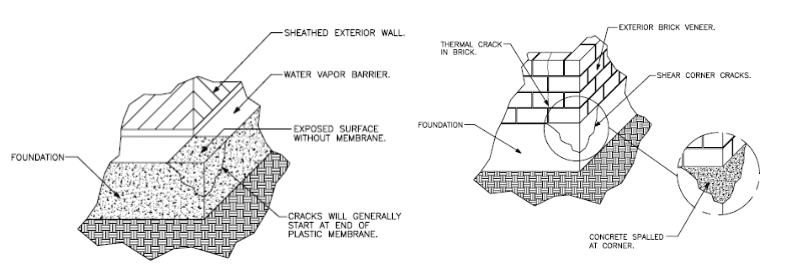
The crack and concrete separations are typically too far away and do not impede into the post tension cables and do not affect the integrity of the foundation. If the mortar is of high strength, often the corner will not only experience a crack but the brick may also experience a vertical shear type crack directly above or adjacent to the corner crack. The following are pictures and drawings to help understand this situation.
The above item has no bearing on the structural adequacy of the foundation but we recommend the area be remediated since it was not installed properly and that over time the crack can get larger and even affect the brick as noted.
To repair the area for cosmetic purposes, the loose concrete should be removed and the corner should be rebuilt with high-strength, non-shrink grout. To alleviate the shearing stresses between the brick veneer and concrete brick ledge, the brick immediately above the corner should be removed and a plastic membrane placed between the foundation and the brick.